VinFast Changes Leadership: Can the Second Generation Make Money After Taking Over?
On September 12, VinFast underwent a major personnel adjustment. Pham Nhat Vuong’s eldest son, Pham Nhat Quan Anh, took over as VinFast’s global CEO, while his second son, Pham Nhat Minh Hoang, became global CEO of GreenSM (the green smart mobility platform).
On the surface, this is a family succession, but when viewed together with the sales, losses, restructuring, and GreenSM’s continuously increasing procurement over the past two years, it becomes clear that VinFast is building a business system in which it can control everything from vehicle manufacturing and usage to after-sales service. The biggest challenge now is whether this system can generate sufficient profits and cash on its own.
The eldest son takes over VinFast, the second son heads GreenSM, forming a “dual-core” structure
Pham Nhat Quan Anh is 33 this year. Since 2019, he has worked in various businesses at VinFast, including products, manufacturing, sales, and after-sales. In May 2026, he first became chairman of VinFast, and in September he formally took over as global CEO. This amounts to completing the integration of the chairman and global business leader roles in one move. In fact, he did not suddenly drop in from nowhere; he has already spent many years familiarizing himself with different businesses within the Vingroup group.
On the other side, the second son, Pham Nhat Minh Hoang, has begun overseeing the global business of the ride-hailing taxi company GreenSM. GreenSM uses a large number of VinFast electric vehicles, and both companies are controlled by the Pham Nhat Vuong family. According to the current plan, GreenSM will purchase approximately 1 million electric cars and 4 million electric two-wheelers from VinFast between 2026 and 2030, and plans to list in Hong Kong in 2028.
Reuters pointed out that this adjustment comes as VinFast is preparing to restructure its business and accelerate overseas expansion. As a result, the eldest son controls “car manufacturing and branding,” while the second son controls “the mobility platform and vehicle consumption scenarios,” and a clear dual-core structure is beginning to take shape.

VinFast is responsible for making cars, while GreenSM puts large numbers of electric vehicles into urban mobility, and the two companies are forming closer business cooperation. Image source: https://danviet.vn/
Why does VinFast need GreenSM? The business starts with one car
Traditional automakers usually have factories build cars and then sell them to consumers through dealers. VinFast has added GreenSM as an extra link: after cars are built, they can directly enter its own mobility service fleet.
This brings several practical benefits. First, the fleet can make large purchases in a short period, helping VinFast increase delivery volume. Second, with a large number of vehicles on the road for a long time, the company can learn more quickly about range, maintenance, and usage conditions. Third, passengers riding in these cars every day are effectively coming into contact with VinFast once a day.
Looking further ahead, after the vehicles retire, they can also enter the second-hand market, and the repair and charging networks will expand along with the fleet. So GreenSM’s value to VinFast is not just that of “an extra buyer.” It sends the car factory onto the streets and also brings real usage experience back to the company.

GreenSM operates VinFast electric vehicles on a large scale, which both increases vehicle usage and allows more consumers to come into direct contact with this Vietnamese car brand. Image source: https://vietnamfinance.vn/
But investors will certainly ask: how much real value is in these orders?
The more cars GreenSM buys, the better VinFast’s delivery numbers look. But for investors, they still need to know how much genuine commercial value these orders can ultimately retain.
In 2025, VinFast’s sales of cars and two-wheelers to GreenSM and its affiliates brought in about $900 million in revenue; by the end of 2025, since the cooperation began in 2023, VinFast had delivered about 100,000 electric cars and 50,000 electric two-wheelers to GreenSM and its affiliates.
These 100,000 vehicles have indeed been put into the market, and GreenSM is indeed operating a mobility business. The question is whether GreenSM can maintain positive cash flow through its own mobility business and continue normal procurement, which directly determines the true commercial value of this batch of VinFast deliveries.
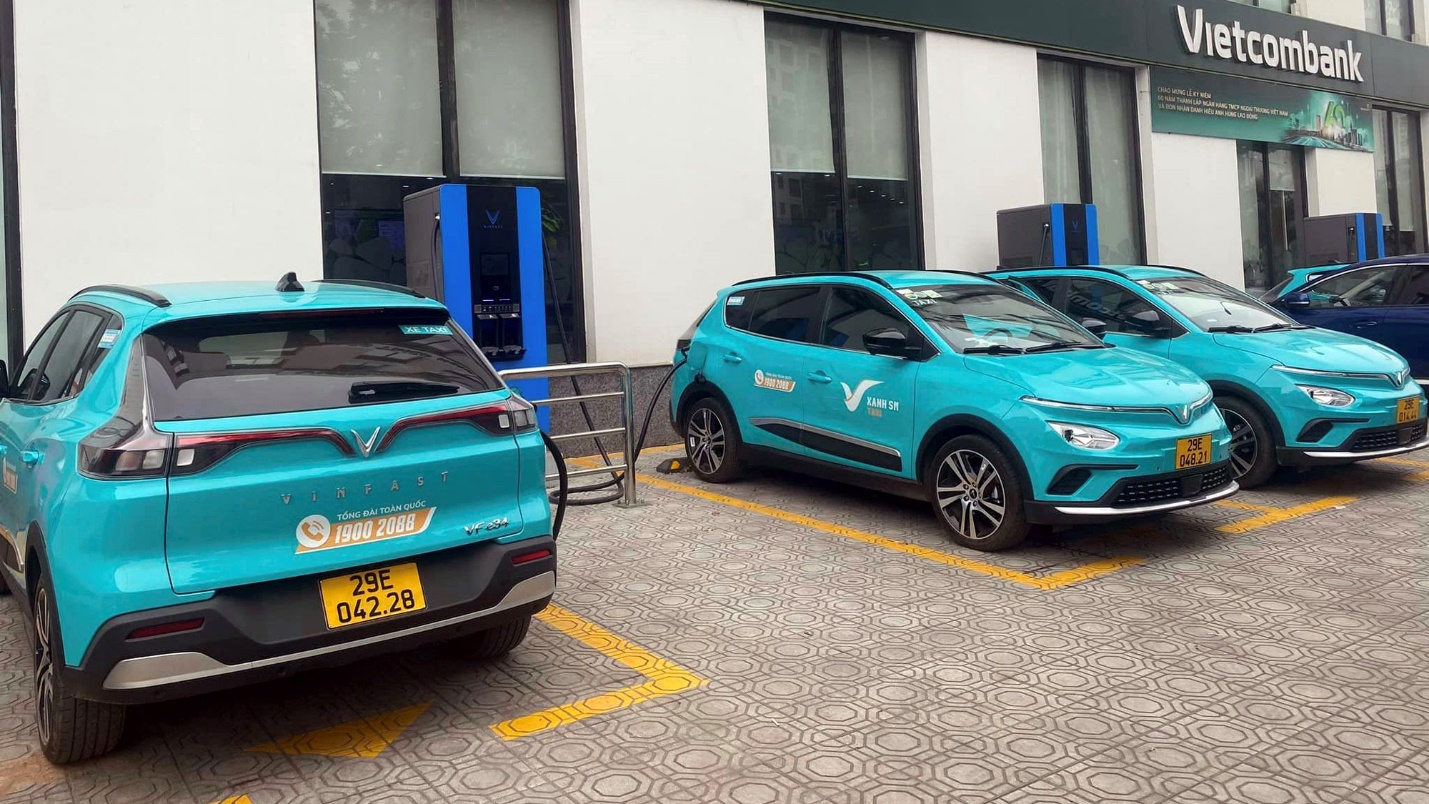
A large-scale electric vehicle fleet requires continuous investment of capital and operational resources. The larger the fleet, the higher the demands on management and cash flow. Image source: https://cafef.vn/
Major structural adjustment: spinning off manufacturing, retaining brand and channels
Even more noteworthy is that VinFast has already completed a major structural adjustment: spinning off its Vietnam manufacturing business from the listed entity, while VinFast retains the brand, R&D, product design, IP, global sales, after-sales, and market strategy; the manufacturing side then enters a new operating structure. U.S. securities filings clearly state that one purpose of this adjustment is to transition toward a more capital-efficient, asset-light model.
This means Pham Nhat Vuong is doing something very clear but also risky: gradually moving the most cash-burning manufacturing assets and the heaviest capital expenditures out of the core car brand entity, while retaining the brand, R&D, and channels that truly have long-term valuation potential.
In the past, Pham Nhat Vuong effectively played three roles: capital provider, strategy decision-maker, and frontline operator. Especially in VinFast’s early days, when the company faced a series of unconventional tasks such as building an automaker from zero, constructing the Hai Phong factory, establishing supply chains, launching models, and entering overseas markets, it was reasonable for the founder to manage it personally. But after entering 2026, the situation has changed.
VinFast has already established a considerable sales scale in Vietnam: in the first eight months of 2026, cumulative deliveries reached 154,073, and in the first quarter of 2026, global deliveries were 58,577, a year-on-year increase of 61%.
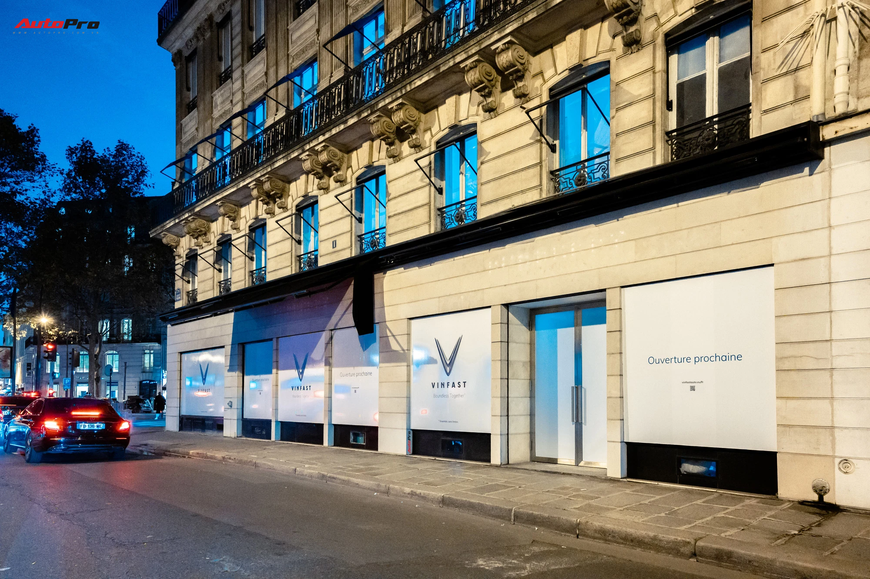
After spinning off heavy manufacturing assets, VinFast is shifting to an asset-light model and focusing fully on branding, R&D, and global channels. Image source: https://kenh14.vn/
At the same time, the company has begun adjusting its overseas strategy. For example, in the Indian market, it has paused the originally planned production of the higher-priced VF3, VF6, and VF7, and is instead developing two new models more suitable for the local price system.
This means VinFast has entered a completely new stage: from “building factories, making cars, and proving it can build them” to “scaling operations, controlling costs, managing cash flow, and selecting markets.” In this stage, the founder does not necessarily need to continue serving directly as CEO. Therefore, this personnel change is actually a very typical signal of organizational upgrading.
Financial pressure remains: scale must turn into cash
VinFast’s sales are increasing, but financial pressure remains very large. In 2025, revenue was about $3.6 billion, net loss was about $4 billion, and net cash outflow from operating activities was about $1.8 billion. Although gross margin improved compared with 2024, it is still in a loss-making state.
What matters more now is how much profit can be retained from each car sold, and when the company can stop relying heavily on external funding. This also makes GreenSM’s role even more important. If the fleet business itself can be profitable and can continue to place large orders with VinFast, then the cooperation between the two companies will form a relatively complete business cycle; if the fleet’s large-scale procurement
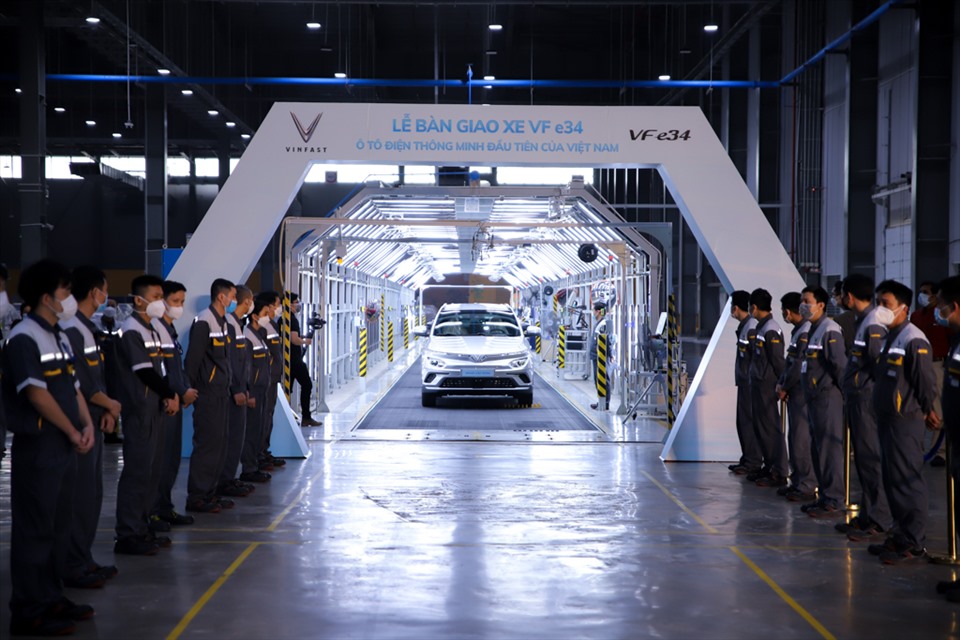
requires long-term support from internal group funds, price concessions, or other arrangements, then the outside world will need to more carefully judge the true value of these sales.
VinFast is rapidly expanding vehicle deliveries, but the focus of the next stage is to gradually turn sales volume into better profits and cash flow. Image source: https://laodong.vn/
Finally: what VinFast truly needs to prove is the closed loop of an entire business
From car manufacturing to GreenSM putting vehicles into operation, and then to repairs, charging, and second-hand cars, VinFast is trying to connect several important links in the automobile business. If this approach can work, it does have the potential to reduce dependence on traditional dealer channels and allow the company to accumulate vehicle usage experience more quickly.
But for now, it is still not enough to look only at how many cars GreenSM has purchased. What is truly worth observing over the long term is whether the fleet can sustain expansion through its own operating income, whether VinFast can gradually improve per-vehicle profitability, and whether the company’s operating cash flow can improve. When these things begin to improve at the same time, the VinFast system will truly become a sustainable business.
Want to discuss investment opportunities or related topics in Vietnam? Please contact us:
Tel: +(886) 095 807 2379
Line: vnlandnote
WeChat: vnlandnote
For more updates and insights about Vietnam, please follow us:
Facebook: www.facebook.com/vnlandnote/
WeChat Official Account: hcmc101