Bidding Farewell to Land Acquisition Difficulties! Vietnam’s Land Law Faces Key Amendments
Vietnam’s real estate market has recently seen another round of important policy discussions. In mid-August, the National Assembly began reviewing proposed amendments to the 2024 Land Law, focusing on land acquisition, land expropriation, compensation and resettlement, and land valuation.
For developers, what really matters is not the complexity of the legal provisions, but whether land acquisition will become faster, whether costs will be easier to estimate, and whether the dreaded “last parcel” bottleneck that often plagues large-scale projects can be reduced.
First Change: The Most Difficult “Last Parcel” May Become Easier to Resolve
For large urban complexes, industrial parks, and infrastructure-supporting projects, the problem is often not a lack of land, but incomplete land consolidation. Even after reaching agreements with most landowners or users early on, a project can still be stalled for a long time if a small number of rights holders refuse to sell.
Vietnam already has a notable 75% mechanism in place. Under Resolution No. 254, passed at the end of 2025 and effective from January 1, 2026, if a project has successfully negotiated agreements for more than 75% of the land area and obtained consent from more than 75% of land users, the provincial People’s Council may, upon meeting conditions and completing procedures, consider reclaiming the remaining land. Decree No. 49, effective January 31, 2026, further clarifies the implementation procedures.
During the current Land Law amendment discussions, the Ministry of Agriculture and Environment, which drafted the law, proposed a consensus threshold and put forward two options based on that: 75% or 85%. The government currently favours 75% (the option considered more conducive to facilitating project integration).
The Ministry stated that this move is intended to accelerate the implementation of investment projects and overcome waste caused by project stagnation.
Delegate Nguyen Thi Viet Nga from the Hai Phong delegation suggested that such a provision should be carefully considered: if a developer reaches agreements with over 75% of the land area and over 75% of land users, the State could reclaim the remaining part. “When the State reclaims the remaining 25% of the land, the relationship between the parties shifts from a civil agreement to the exercise of public power,” Nga noted.
However, she also mentioned that the 75% figure should not be the sole criterion; project scale, the number of remaining non-consenting parties, and the impact on residents’ lives should also be taken into account.
If the system continues to move in this direction, the greatest benefit for developers with large project pipelines may not be “cheaper land purchases,” but rather shortened land consolidation time, faster progression to construction and sales phases, and potentially improved land turnover rates.
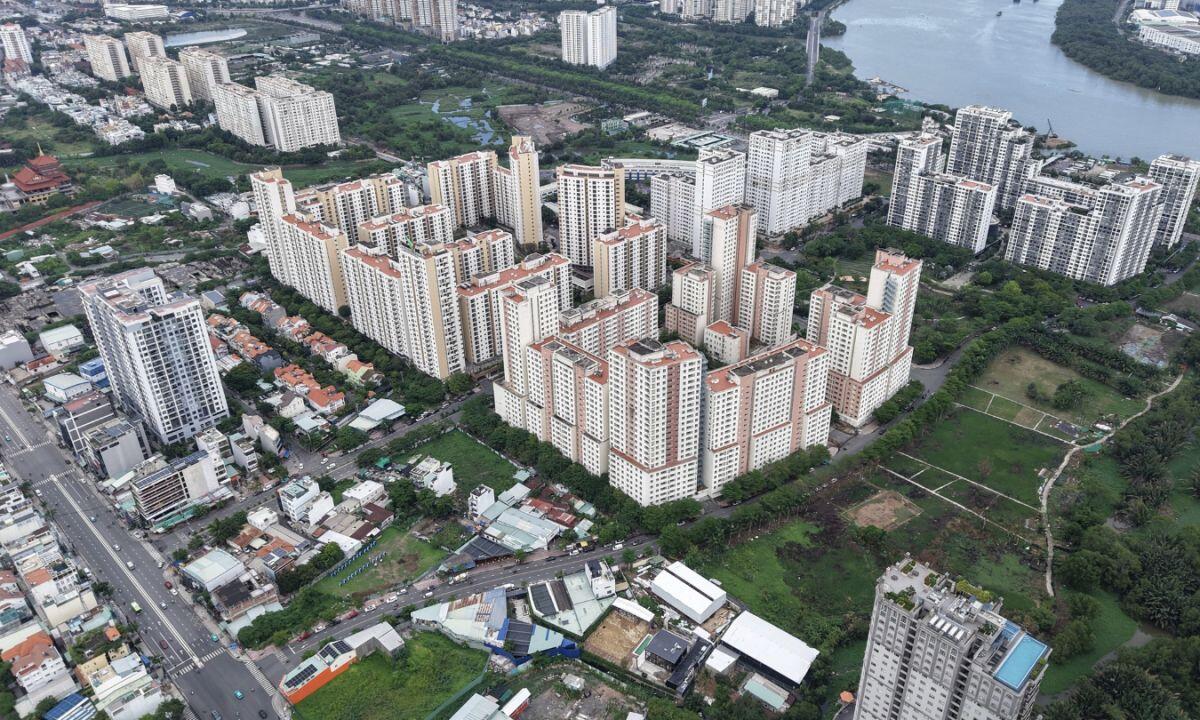 Real estate in the eastern part of Ho Chi Minh City. Source: https://24hmoney.vn/
Second Change: Land Prices May Not Necessarily Drop, but Costs May Become More Predictable
The second key point is land valuation. What genuinely troubles many developers is not necessarily high land prices, but the volatility of land cost estimates during project execution.
The current direction under discussion is to make land prices more reliant on data, valuation methods, and publicly available information, while strengthening connectivity among various databases to reduce the potential for price manipulation or inflated valuations.
For developers, this does not necessarily mean that land prices in hot areas will definitely fall. The more practical impact is this: if land cost estimates at the time of acquisition are closer to the final outcome, companies can more easily conduct investment calculations and judge in advance whether a project is viable. For local governments, clearer data-based land pricing also facilitates long-term planning for land supply and investment promotion.
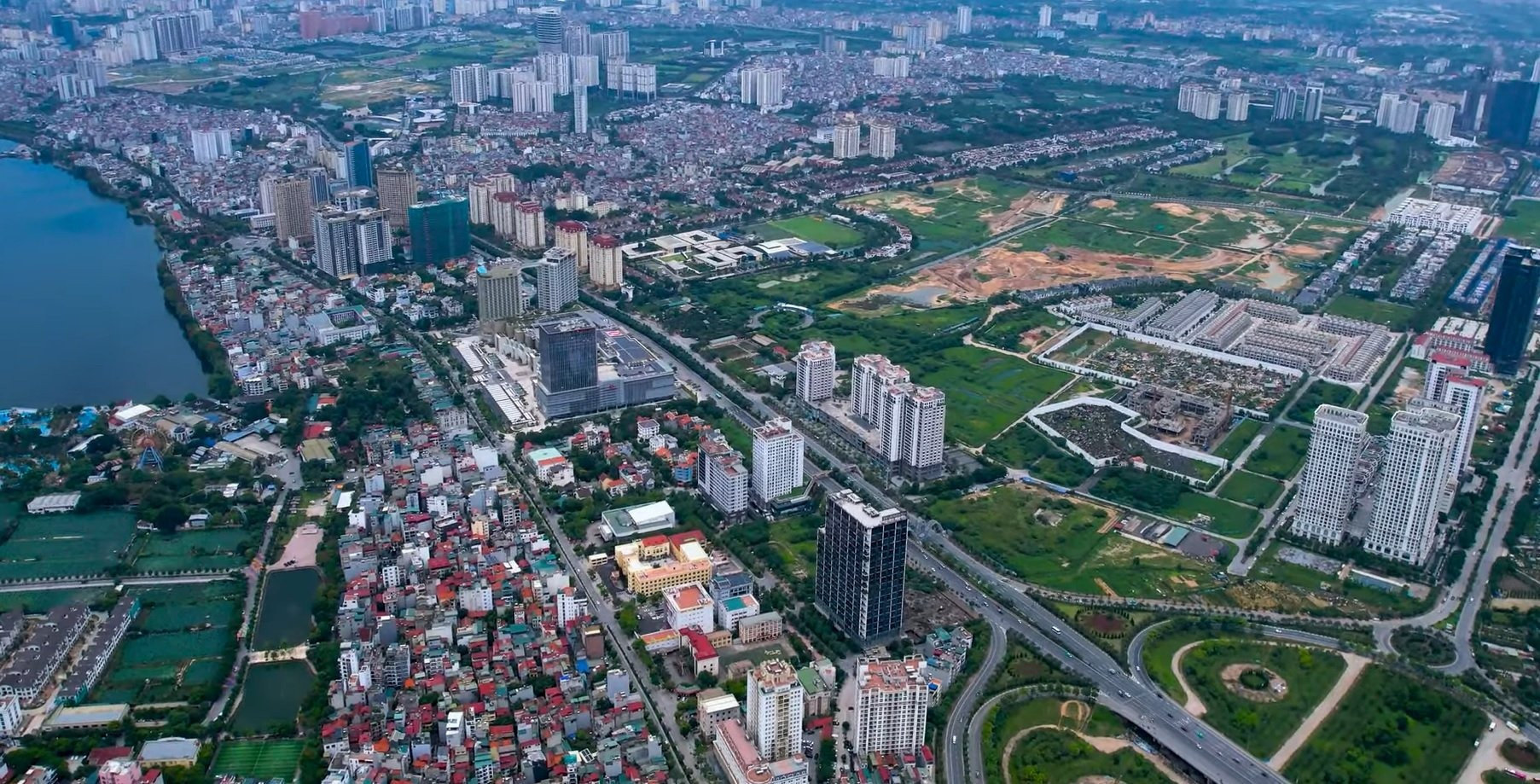
Land is a crucial input factor in economic activities. Source: https://nguoiquansat.vn/
Third Change: What Foreign Investors Care About Most Is Whether Projects Can Proceed as Expected
For foreign investors, land prices are not the only concern. What worries them more is how many rounds of negotiation, expropriation, compensation, resettlement, and policy adjustments they will have to endure after obtaining land. If any single step drags on too long, the original return-on-investment calculations may be completely upended.
If the conditions for government intervention, the threshold for land negotiation, and compensation and resettlement procedures can be spelled out more clearly in the future, companies will be better able to assess the worst-case scenario before investing. For foreign developers, this kind of “predictability” is more important than a land cost that is merely a few percentage points lower.

Rendering of the Techtronic Tools factory, invested in by a Singaporean investor. Source: https://nhadautu.vn/
Conclusion: Accelerating Land Acquisition and Providing Greater Certainty for Developers
The significance of this round of land policy adjustments in Vietnam for real estate developers lies primarily in enabling more accurate calculations of the timing for land acquisition, valuation, and project advancement, reducing the risk of large-scale projects being long-stalled by a small number of land rights holders; making land valuation more data-driven helps companies estimate costs upfront; and clearer conditions for government intervention give foreign investors more confidence in assessing project timelines.
However, it should be noted that the National Assembly is currently discussing the direction of amendments; some content is still under review and not all provisions are finalised. What truly merits attention next is the formal draft bill to be submitted to the National Assembly in October this year.
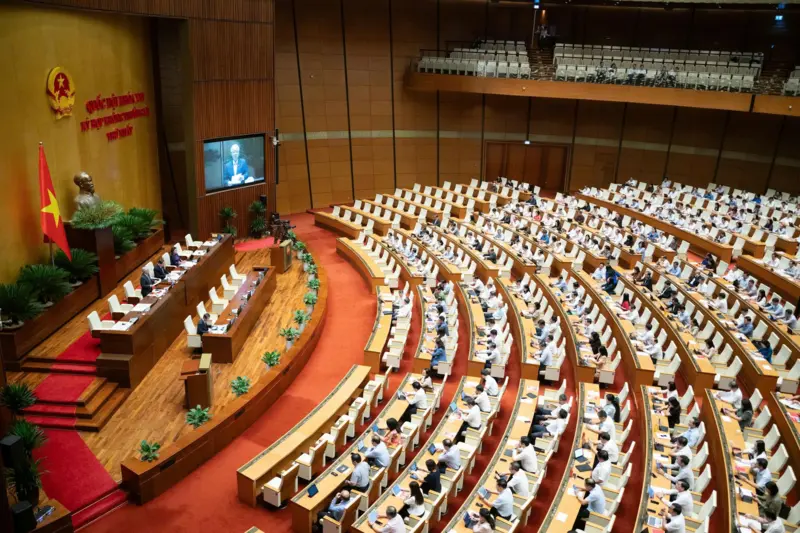
Scene from the National Assembly discussion session on August 21. Source: https://www.bbc.com/
Want to discuss investment opportunities or related topics in Vietnam? Please contact us:
Tel: +(886) 095 807 2379
Line: vnlandnote
WeChat: vnlandnote
For more updates and insights about Vietnam, please follow us:
Facebook: www.facebook.com/vnlandnote/
WeChat Official Account: hcmc101