- Investment GuidesHome›Industrial
Industrial
The investment characteristics of industrial real estate are its long investment cycle, stable income, and higher rental returns.
Despite the impact of the COVID-19 pandemic in 2020, industrial land prices in Vietnam continued to rise. Industrial real estate investment in Vietnam remains a relatively stable, safe, and high-yield asset class among emerging markets.
However, most people know very little about industrial real estate and do not know where to start. So how can investors understand the investment process for industrial real estate? Below is everything you need to know.
1. What Is the Investment Return of Industrial Real Estate?
In general, the rental yield of residential properties in major domestic cities is around 1% to 3%. In other words, if calculated purely based on rental income, it may take 33 to 100 years to recover the investment cost.
By contrast, rental yields for industrial real estate in Vietnam can reach 8% to 12%. In other words, rental income over a 10-year period may be enough to cover the investment cost, while the remaining value of the land and factory becomes net profit.
2. Types of Industrial Real Estate
Industrial land in Vietnam is mainly divided into two categories: land inside industrial parks (KCN) and land outside industrial parks (SKC).
Land Inside Industrial Parks:
- The Vietnamese government encourages foreign investors to invest inside industrial parks. Foreign investors may directly hold the land use right certificate, commonly known as the red book.
- Manufacturers operating inside industrial parks may also enjoy tax incentives. In general, they may receive tax exemption for the first two years, a 50% tax reduction for the following four years, and then a preferential tax rate of 20% in subsequent years.
- Industrial parks usually provide more complete infrastructure, including planned roads, water and electricity supply, wastewater treatment, supporting residential areas, and commercial facilities. They also provide supporting services such as assistance with company registration and recruitment.
- Industrial parks are managed under a unified system by the industrial park management authority.
Land Outside Industrial Parks:
- Foreign investors cannot directly obtain land use rights through personal or corporate transfers, unless the land use rights are directly approved and granted by the government.
- These areas are not part of a unified planning zone, so the infrastructure is usually less complete.
- However, land outside industrial parks may offer greater flexibility in terms of location and changes to land use purposes.
3. How to Choose an Industrial Park?
As of 2019, Vietnam had a total of 336 industrial parks, including those under construction. According to data from the Ministry of Planning and Investment, the occupancy rate of industrial park land reached 85%.However, each industrial park has different advantages depending on its location and the regulations of its management authority. Not every industrial park is suitable for investment.
Currently, the main industrial zones are distributed across northern, central, and southern Vietnam, with major industrial clusters centered around Hanoi, Da Nang, and Ho Chi Minh City.
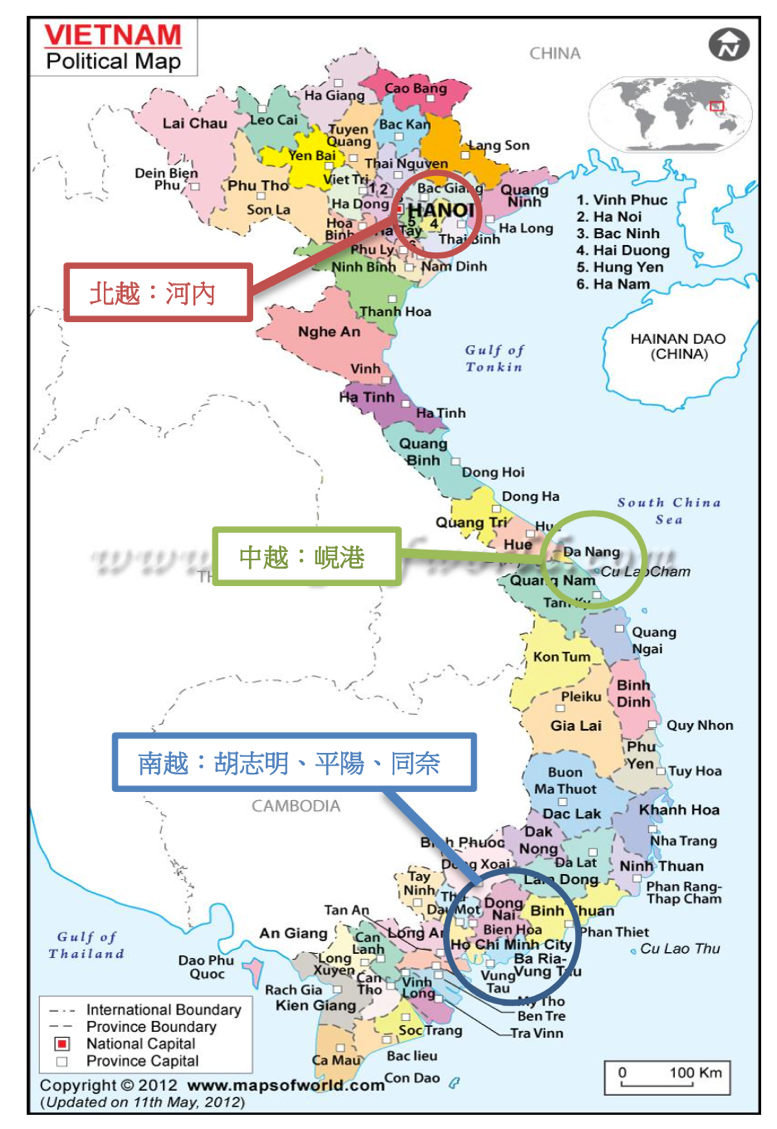
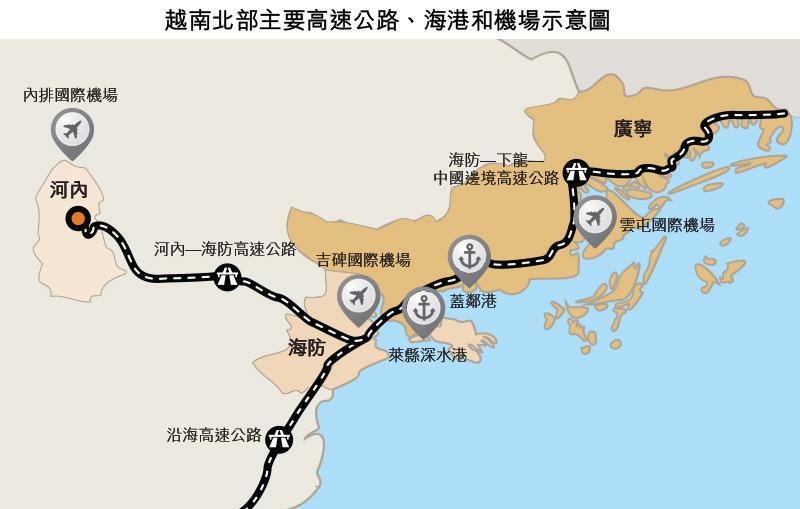
The biggest advantage of northern Vietnam is its proximity to China. It is suitable for manufacturing companies that need to import large quantities of materials or components from China. The expressway from Van Don in Quang Ninh Province to Mong Cai, near the Chinese border, is under construction. In the future, it may take only around three hours to travel from Hanoi to Dongxing in Guangxi, China.
For many manufacturers, shifting part of their production capacity from China to Vietnam is also in line with the “China Plus One” strategy.
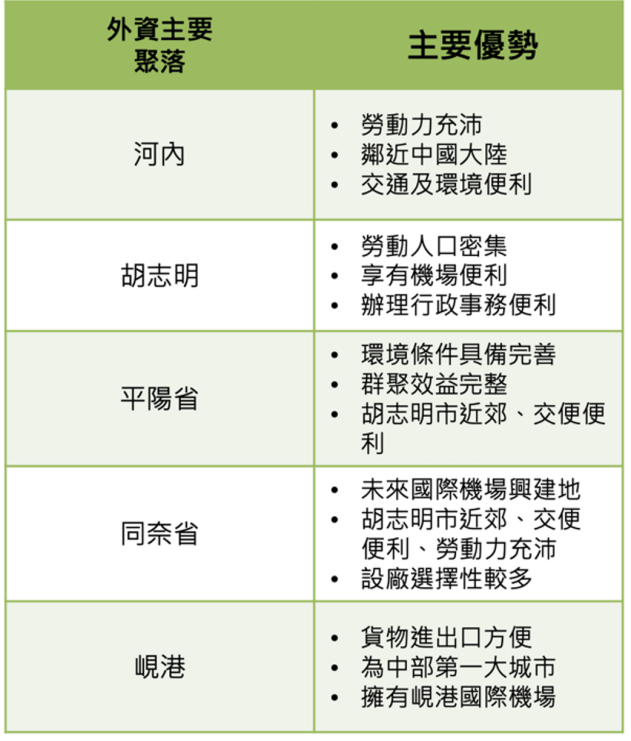
The biggest advantage of southern Vietnam is that industrial provinces represented by Binh Duong have already formed a relatively complete processing and manufacturing supply chain. With the development of Ho Chi Minh City’s Ring Road 3, Ring Road 4, and expressway infrastructure, the region’s transportation cost advantages are expected to be gradually reflected in asset values.

4. What Should Investors Pay Attention to When Investing in Industrial Parks?
- Land plot size: In general, planned land plots inside industrial parks are usually 10,000 square meters or above. Some industrial parks may also offer smaller plots of around 5,000 square meters.
- Transportation conditions and geographical environment: Before investing, investors should carefully understand the transportation conditions and geographical environment of the industrial park, such as its distance from ports, airports, and expressways. Taking southern Vietnam as an example, more than 90% of transportation passes through Cat Lai Port in Ho Chi Minh City. If the industrial park is too far from the port, transportation costs may become too high.
- Industrial park regulations: Each industrial park has its own regulations. Before investing, investors must clearly understand the rules of the industrial park, such as the types of industries it accepts and the tax incentive policies available for factory investment. For example, in Binh Duong Province, there are stricter regulations on dyeing and finishing industries. If a factory operator plans to engage in dyeing-related activities in the future, operating in Binh Duong may be more difficult.
5. What Are the Legal Procedures for Investing in Industrial Parks?
In Vietnam, land is collectively owned by the people. In other words, Vietnam does not recognize private land ownership, but only land use rights.
For commercial land use, the land use term for industrial land is usually 50 years. The land use right certificate, or red book, will also show the 50-year land use term.
Generally, the government accepts two types of land payment arrangements: land users may pay land use fees annually, or pay the full 50-year land use fee in one lump sum. The advantage of paying the full 50-year land use fee is that the land use right can be transferred directly and can also be used as collateral for bank financing.
1) Due Diligence
After an industrial park developer obtains land use rights from the government, usually for land areas ranging from 20 hectares to 1,000 hectares, it will begin attracting investors and resell the planned industrial land use rights to incoming investors by plot size.
- If investors purchase land use rights directly from the developer, this is considered a primary transaction. Investors need to confirm whether the developer has fully paid the 50-year land use fee. If the payment has not been completed, the investor may not be able to obtain a 50-year red book, which also means the land may not be used for mortgage financing. Land in this type of industrial park is usually transferred at a much lower price, so investors should remember that a cheap price does not necessarily mean a good deal.
- If investors purchase land use rights from another factory operator, this is considered a secondary transaction. Investors need to understand whether the seller is directly transferring the land or transferring the equity of the company that holds the land. If it is a direct land transfer, investors must verify the validity of the red book, the remaining land use term, and the additional fees arising from the transfer. Different industrial parks have different fee standards for transfers.If the transaction is structured as a company equity transfer, investors must conduct due diligence on the target company to avoid potential risks after completion.
2) Signing a Letter of Intent for Land Transfer
After all transfer conditions have been properly investigated, the investor may negotiate specific terms with the seller and sign a letter of intent for land transfer or a deposit agreement.
3) Obtaining Written Approval from the Industrial Park Management Authority
After negotiating the transfer conditions and related fees with the industrial park during due diligence, the parties should obtain a written opinion from the industrial park regarding the transfer and prepare the land use right lease contract with the industrial park.
4) Signing the Formal Land Use Right Transfer Contract
5) Company Establishment and Land Use Right Registration Change
The company establishment procedures must be completed with the Department of Planning and Investment. At the same time, the land use right certificate, or red book, must be updated through the Department of Natural Resources and Environment.
If you would like to further understand specific investment standards, please feel free to contact us. We have data on hundreds of industrial parks and can help you make the most suitable investment decision.
Want to discuss investment opportunities or related topics in Vietnam? Please contact us:
Tel: +(886) 095 807 2379
Line: vnlandnote
WeChat: vnlandnote
For more updates and insights about Vietnam, please follow us:
Facebook: www.facebook.com/vnlandnote/
WeChat Official Account: hcmc101
Investment Guides
- Contact
-
- Call:(+886) 095 807 2379
- Address:76 Le Lai, Ward Ben Thanh, District 1,
Ho Chi Minh City