Vietnam to Add Quang Ninh and Bac Ninh as Centrally Governed Cities While Ho Chi Minh City Plans a Large-Scale Free Trade Zone
Vietnam’s urban development is entering a new and highly pragmatic phase. What kind of economic dynamism could emerge if Singapore’s mature port and financial network were combined with Bangkok’s extensive manufacturing base? Recently, Vietnam’s central authorities approved the plan to upgrade Quang Ninh and Bac Ninh into centrally governed cities. At the same time, Ho Chi Minh City unveiled a proposal to develop a nearly 4,200-hectare Free Trade Zone (FTZ).
These initiatives are not merely administrative adjustments. Instead, they represent Vietnam’s concrete efforts to narrow the gap with internationally competitive cities such as Shenzhen and Singapore amid the ongoing restructuring of global supply chains.

Ho Chi Minh City. Source: Znews.vn
Quang Ninh and Bac Ninh: Vietnam’s Next Centrally Governed Cities
Vietnam’s urban landscape is expected to welcome two new centrally governed cities. The Central Committee of the Communist Party of Vietnam has agreed in principle to elevate Quang Ninh and Bac Ninh to this status. Both provinces have consistently demonstrated strong performance in industrial manufacturing and regional economic development, making them well qualified for the upgrade.
Once officially designated as centrally governed cities, they will enjoy greater autonomy in resource allocation and policy implementation, allowing them to play a more significant role in driving coordinated growth across Northern Vietnam’s key economic region.
Specifically, Quang Ninh Province recorded economic growth of nearly 12% last year and has set a target of achieving GDP per capita exceeding US$11,800. Looking ahead, Quang Ninh aims to develop into a modern city that integrates ecological resources, maritime advantages, and cultural heritage.
To achieve this vision, the province is shifting away from fragmented development toward stronger regional connectivity. Major investments are being directed toward high-speed railways, airport infrastructure, and smart city development.
Meanwhile, following its merger with Bac Giang Province, Bac Ninh now covers approximately 4,700 square kilometers and has a population exceeding 3.6 million. The province is positioning itself as a high-tech manufacturing hub, prioritizing the development of semiconductors, microchip production, and artificial intelligence with the ambition of securing a strategic position within the global electronics supply chain.
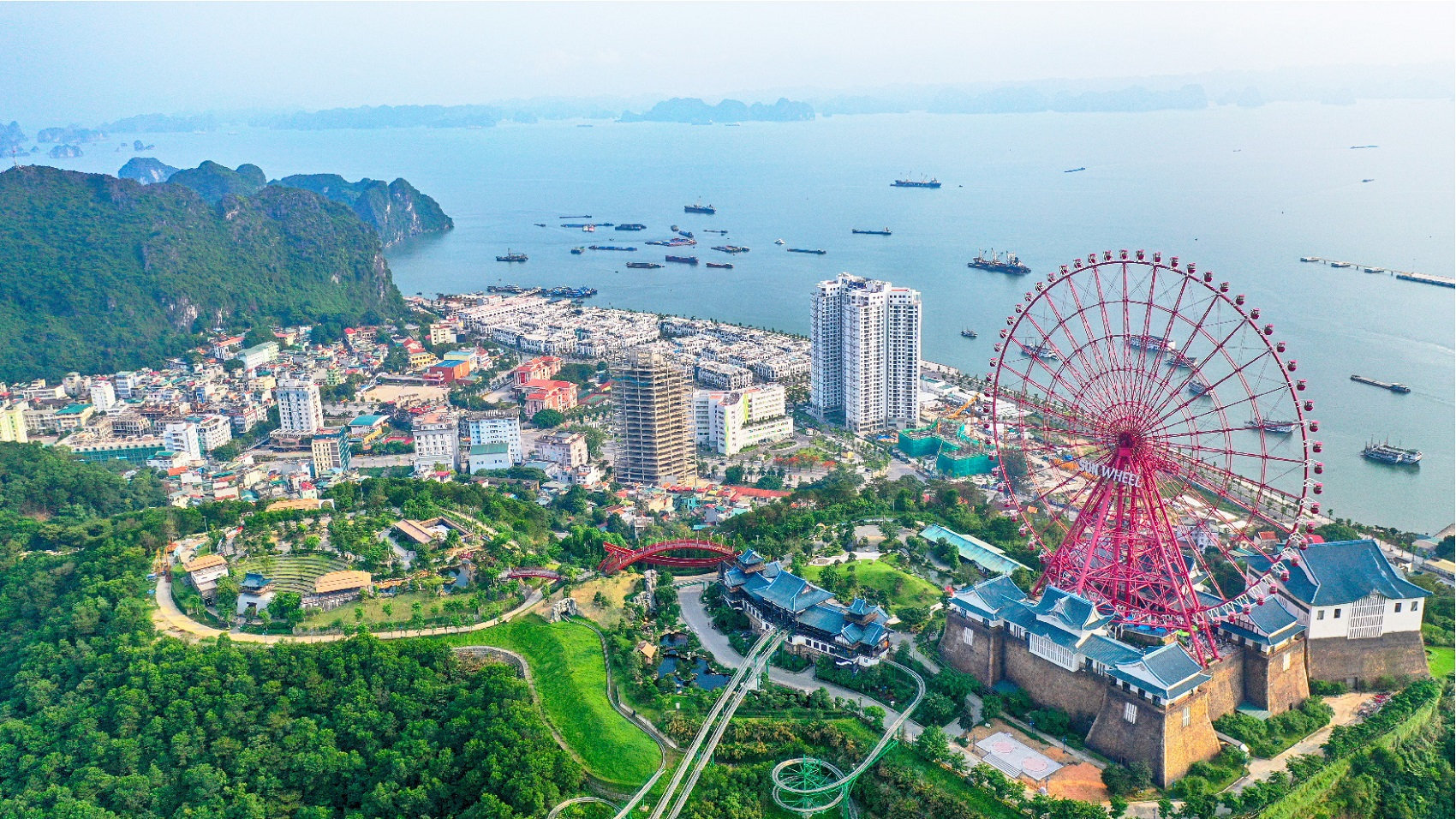
A corner of Quang Ninh Province. Source: Baoquangninh.vn
Ho Chi Minh City’s New Vision: A Nearly 4,200-Hectare Free Trade Zone
While Northern Vietnam continues strengthening its industrial base, Ho Chi Minh City is simultaneously reshaping its future urban landscape.
To enhance its international competitiveness, the city plans to establish a Free Trade Zone covering nearly 4,200 hectares in the Cai Mep Ha area. The site is located approximately 50 kilometers from downtown Ho Chi Minh City and only 25 kilometers from Long Thanh International Airport, giving it exceptional logistical advantages.
According to the master plan, the Free Trade Zone will be divided into three major functional zones comprising eight interconnected sub-zones. The development includes more than 300 hectares of existing container port facilities, the future expansion of the Cai Mep Ha Container Port and downstream port areas, a dedicated railway station covering approximately 30 hectares to facilitate cargo transportation, and more than 310 hectares allocated for inland waterway ports.
In addition, the logistics center, occupying more than 900 hectares, will become the largest functional area within the project. Around 850 hectares will be allocated for industrial production, urban development, and supporting services.
The city has also established a clear implementation timetable. Between 2026 and 2030, priority will be placed on infrastructure construction, land clearance, and the introduction of investment incentive policies to attract both domestic and international strategic investors.
By 2035, the objective is to transform the area into an international cargo transshipment hub of regional Asian significance.
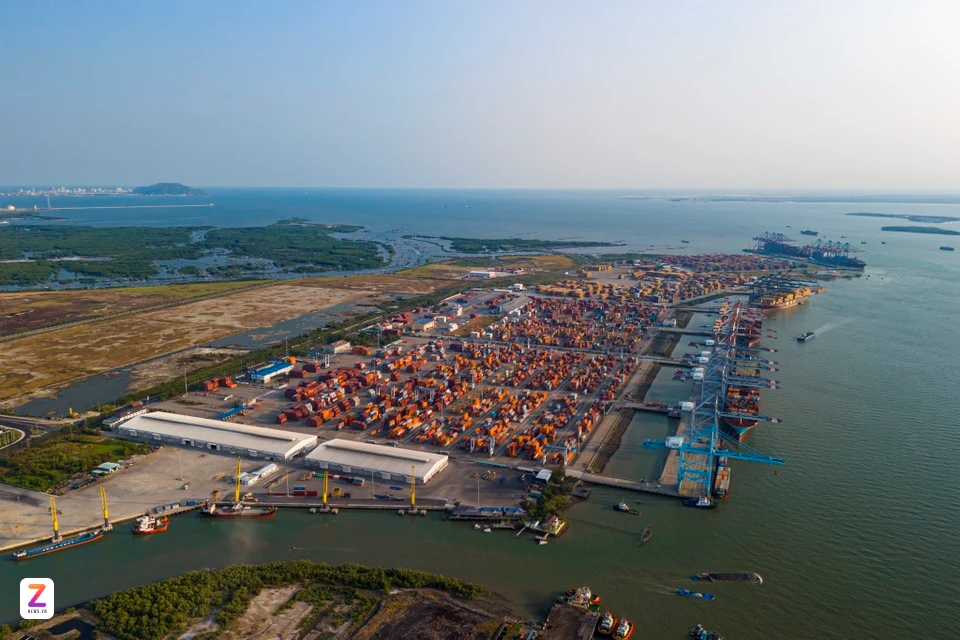
Ho Chi Minh City has identified the Free Trade Zone connected to the Cai Mep Ha Port Area as one of its future engines of economic growth.Source: Znews.vn
Ho Chi Minh City’s Competitive Edge: Combining Port Infrastructure with Manufacturing
What practical advantages does Ho Chi Minh City possess in its ambition to compete with internationally renowned cities? Compared with its regional peers, the city’s strengths are quite distinctive. While Singapore boasts world-class port facilities and financial services, it has relatively limited industrial land. Bangkok, on the other hand, has a well-established manufacturing base but lacks a major deep-water port in close proximity to its urban core. Ho Chi Minh City is uniquely positioned by combining both of these advantages.
Today, Ho Chi Minh City is not only home to Vietnam’s largest financial and commercial center but also possesses a comprehensive deep-water port system. In particular, the Cai Mep–Thi Vai Port Complex is one of the few deep-water ports in Southeast Asia capable of accommodating 200,000-ton ultra-large container vessels. This enables large cargo ships to sail directly to Europe and North America without transshipment through Singapore or Hong Kong. As multinational corporations continue to diversify their manufacturing and logistics networks across Asia, Ho Chi Minh City’s ability to integrate production and direct international shipping has become a significant advantage in attracting foreign investment.

The Cai Mep–Thi Vai Port Complex in Tan Phuoc Ward. Source: Znews.vn
Growth Opportunities Behind High Logistics Costs
Despite its considerable advantages, Ho Chi Minh City must still overcome several practical challenges before it can truly rival cities such as Shenzhen and Singapore. According to available data, Vietnam’s logistics costs currently account for approximately 16%–17% of GDP, significantly higher than the 8%–10% typically seen in developed economies.
This indicates that there remains substantial room for improvement in logistics distribution, cargo consolidation, and related financial services. Over the past several years, fragmented administrative boundaries have often resulted in ports, logistics parks, and industrial zones developing independently rather than operating as an integrated system, leading to duplicated investments and lower overall efficiency.
Competition from neighboring countries is also becoming increasingly intense. Singapore handles more than 39 million TEUs annually, making it one of the world’s leading transshipment hubs. At the same time, Malaysia’s Port Klang and Thailand’s Laem Chabang Port continue to expand their capacities, while cities such as Shanghai and Shenzhen benefit from strong technological, financial, and institutional support.
Against such competition, relying solely on traditional port operations and labor-intensive manufacturing will not be sufficient to maintain long-term competitiveness. From an investment perspective, however, Vietnam’s relatively high logistics costs also highlight significant opportunities for future efficiency gains. By reducing administrative barriers and adopting digital supply chain management systems, Vietnam’s modern logistics industry has considerable potential for substantial long-term growth.

Ho Chi Minh City possesses all four key strategic elements: it serves as both a financial and commercial hub and the country’s largest center for industry and manufacturing. Source: Znews.vn
A Long-Term Vision: Toward a More Flexible Governance Framework
To transform these advantages into tangible economic outcomes, Ho Chi Minh City will need to adopt a new development strategy that views its maritime resources not as peripheral assets but as the primary driver of future growth. Experts suggest that the city should move beyond functioning merely as a traditional transportation hub and instead establish a comprehensive supply chain ecosystem integrating commercial finance, maritime insurance, and digital data services.
Achieving this long-term vision will require more flexible governance mechanisms. Ho Chi Minh City is expected to seek greater administrative autonomy, including the authority to retain a larger share of its fiscal revenues, issue municipal bonds, and establish dedicated investment funds for marine economic development, thereby attracting greater participation from private capital.
At the same time, coastal areas such as Can Gio could further develop international convention tourism and the nighttime economy, providing higher value-added services. Only by establishing a coordinated regional development model that integrates seaports, airports, and the Free Trade Zone can Ho Chi Minh City strengthen its position within Southeast Asia’s economic network and lay a solid foundation for sustainable long-term growth.
Want to discuss investment opportunities or related topics in Vietnam? Please contact us:
Tel: +(886) 095 807 2379
Line: vnlandnote
WeChat: vnlandnote
For more updates and insights about Vietnam, please follow us:
Facebook: www.facebook.com/vnlandnote/
WeChat Official Account: hcmc101